
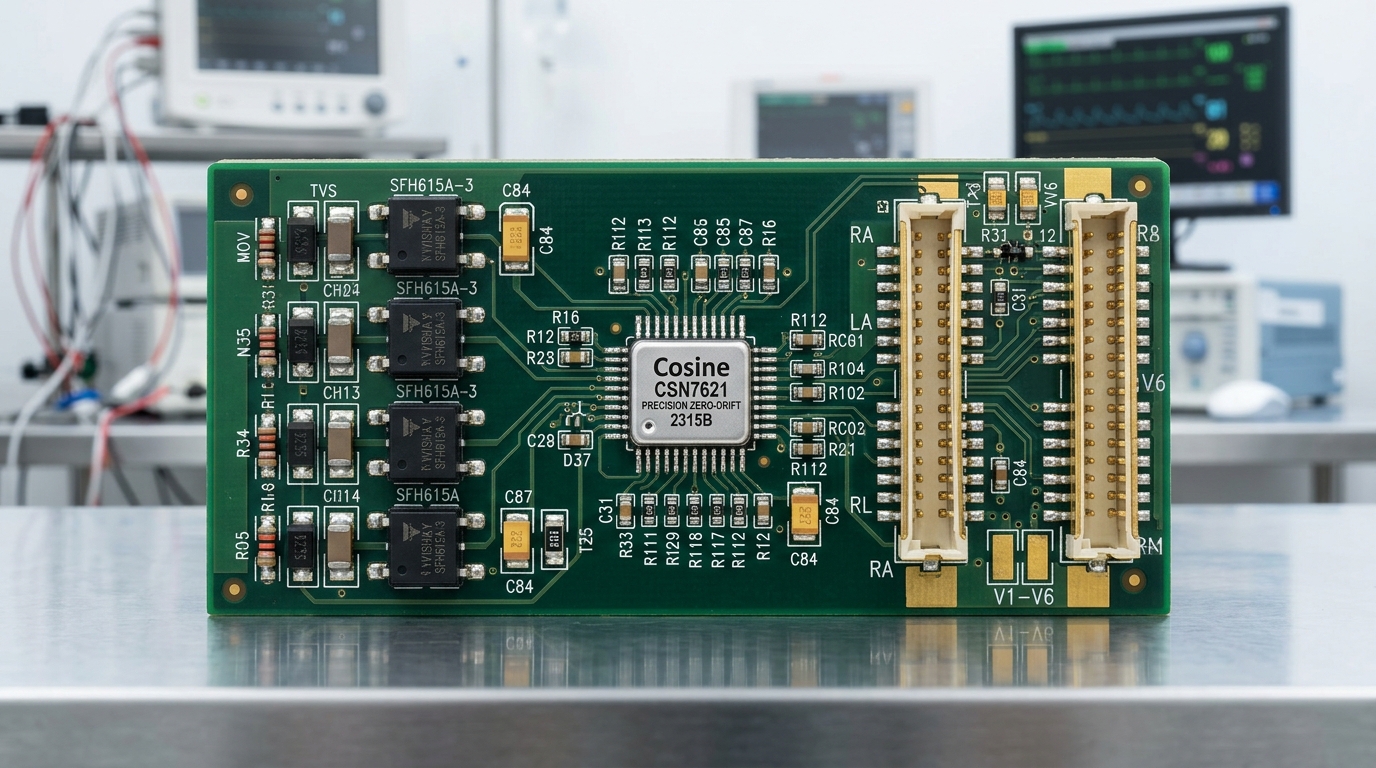
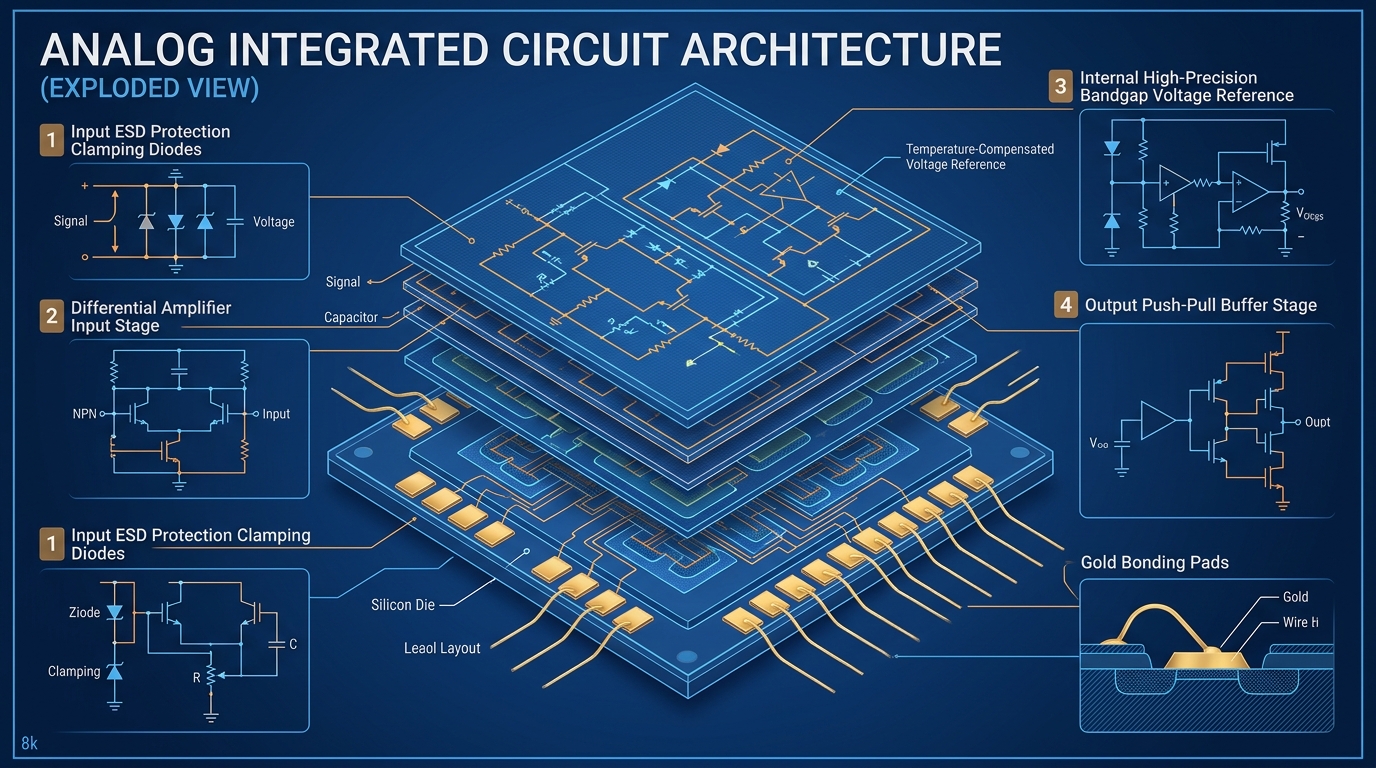
The Result: Upgrading the thermopile differential gas flow sensor amplifier to the Cosine COS8552 slashed input offset drift from 8µV/°C down to 0.05µV/°C, extending mandatory hospital maintenance calibration intervals from 2 months to 18 months and reducing device operating lifecycle costs by 75%.
1. The Medical Sourcing Challenge
Intensive care ventilators regulate micro-liter air/oxygen flow volumes based on tiny differential thermoelectric voltages (tens of microvolts) produced by thermal mass flow meters. The customer faced severe operational hurdles:
- Temperature Drift in ICU Wards: As clinical equipment warmed up, the baseline reading drifted by as much as 15%, triggering false tidal volume alarms.
- Frequent Hospital Service Calls: Clinical biomedical engineering staff were forced to perform complex multi-point manual gas recalibrations every 60 days.
2. The Material Solution: COS8552
The customer qualified the COS8552 dual precision chopper amplifier in SOIC-8. Key performance metrics delivered:
- Max Input Offset < 5µV: Zero-drift chopping eliminates DC offset errors without potentiometers or factory EEPROM calibration.
- Thermal Drift < 0.05µV/°C: Ensures unshakeable baseline stability across the entire 0°C to +50°C clinical ambient spectrum.
- 120dB CMRR / PSRR: Isolates the delicate microvolt flow sensor signal from internal 24V switching power supply ripple.
Replicate These Performance Gains in Your Project
Request our free FAE engineering review and sample evaluation kit. We dispatch test boards and evaluation chips via express courier within 24 hours.