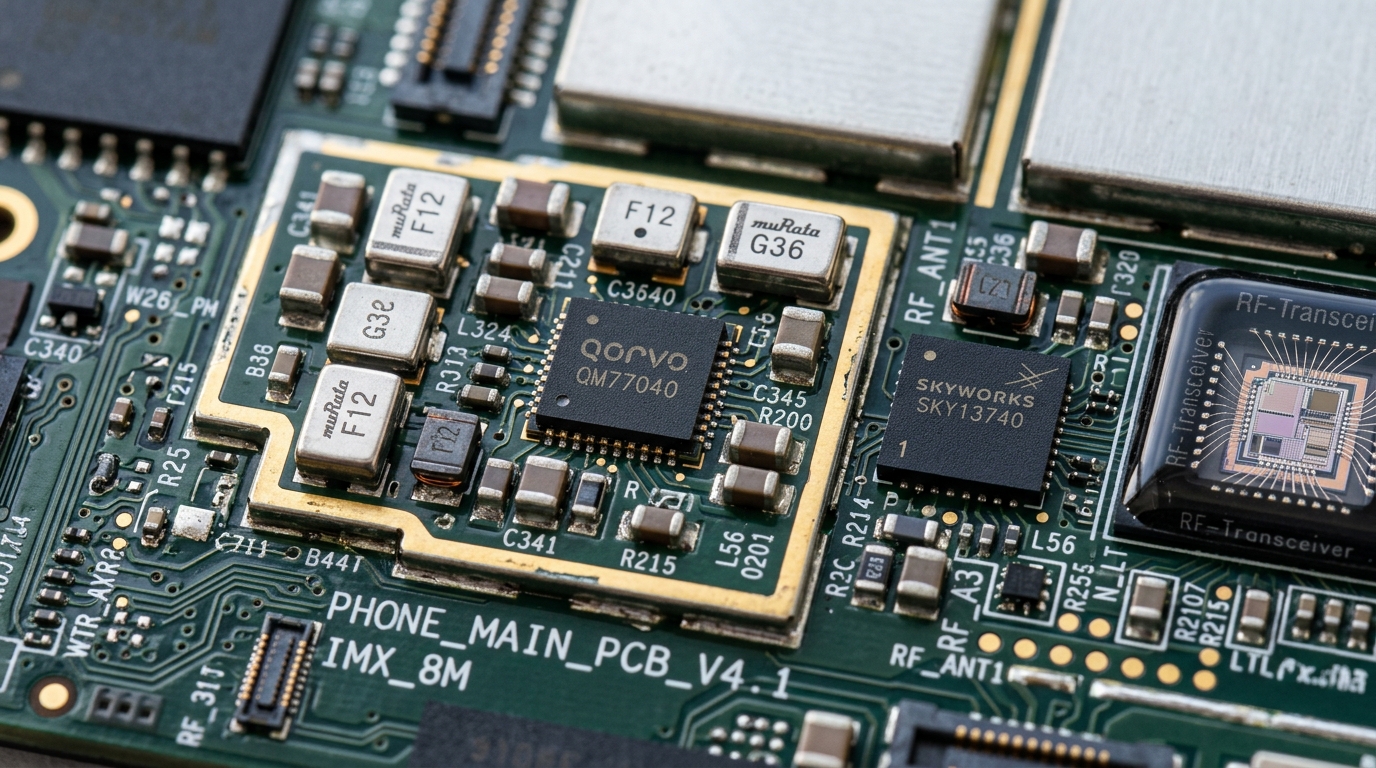
The mobile RF front-end architectures of 3G and early 4G smartphones were relatively simple and could be constructed using discrete components. Today, mobile RF front-ends have become immensely complex to support the ever-evolving LTE and 5G standards. Smartphones must support dozens of frequency bands simultaneously, requiring advanced filtering and multiplexing techniques to reduce power consumption and signal interference. By using carrier aggregation, phones combine multiple bands to achieve higher bandwidth and data rates. Global, multi-region phones require even more frequency bands, leading to an exponential increase in filter count: a modern 5G smartphone can require more than 100 RF filters.
Comprehensive RF System Characterization
Analyzing mobile RF systems involves tracing the signal path from the antenna to the RF transceiver and baseband processor. Standard reverse engineering methods include teardowns, functional RF testing, packaging analysis, structural delayering, and transistor-level circuit extraction. These analyses reveal different design philosophies: while some vendors focus on pin-compatible drop-in replacements to adapt a single board design to different regional band combinations, others focus on highly integrated multi-chip architectures. In terms of patents, the vast majority of intellectual property in this domain is concentrated around circuit topologies, particularly in the RF front-end modules.
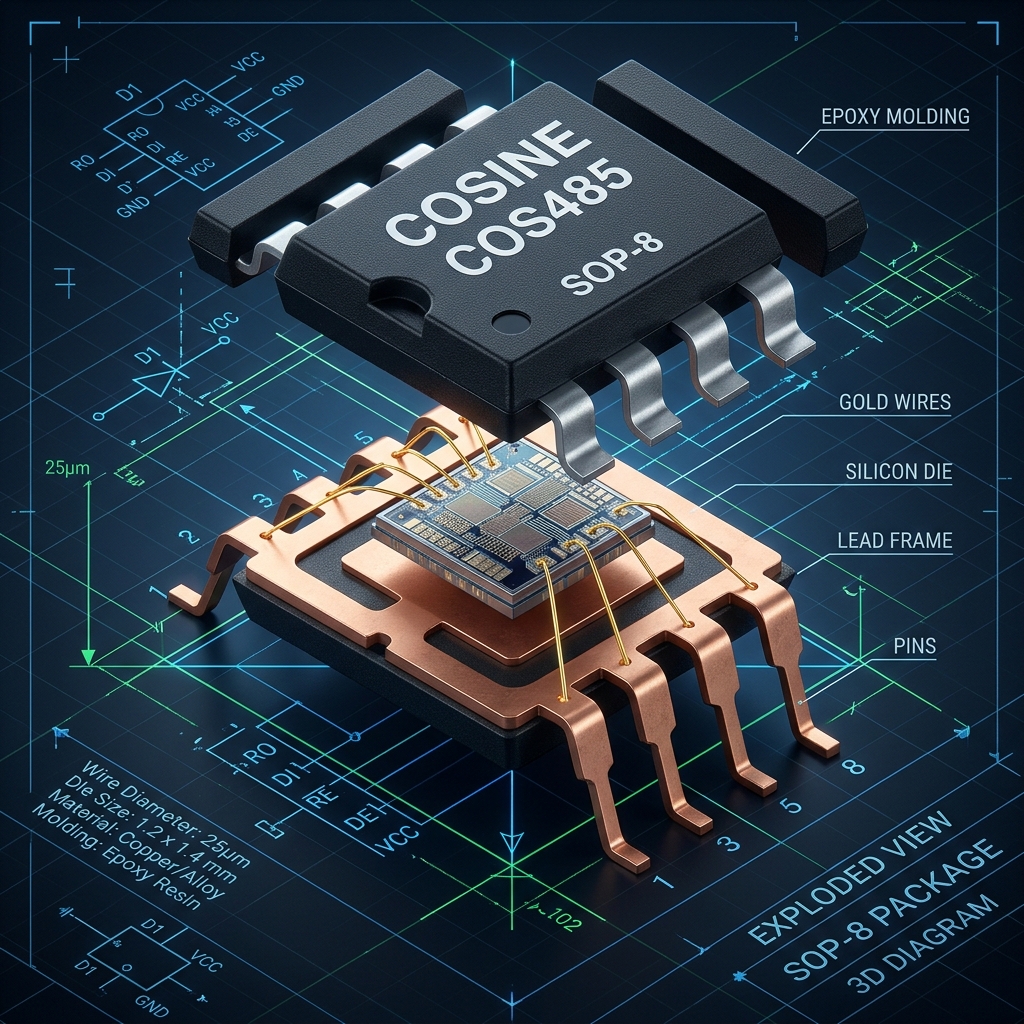
As the RF front-end continues to migrate toward integrated modules containing multiple dies and passive components (Front-End Modules, or FEMs), module-level delayering and analysis become critical. This article details recent innovations in mobile RF architectures and the methodologies used to examine them.
Teardown Insights: Basebands and Transceivers
For example, a teardown of modern smartphones reveals advanced platforms such as Intel's XMM 7560 LTE-Advanced Pro platform, fabricated on a 14nm process. This platform integrates CDMA support, enabling a unified transceiver architecture. Additionally, packaging analysis of Broadcom's AFEM-8072 mid/high-band front-end module reveals the integration of over 10 active dies and multiple passive devices on a single substrate, incorporating power amplifiers, antenna switches, duplexers, and low-noise amplifiers (LNAs) within a single package.
Similarly, reverse engineering smartphone PCBs and tracing envelope trackers (ET) shows how they dynamically adjust the power supply of RF power amplifiers based on transceiver feedback, maximizing system-level power efficiency during high-peak OFDM transmissions.